
Cherokee County Court Docket Searches
Every Cherokee County district case starts at the Kansas District Court Public Access Portal. Accept the terms first. Pick District rather than Appellate, and set the county to Cherokee. From there a docket search can run on several keys. Use a case number, a party name, a business name, party as business name, or a citation number. An exact case number is the cleanest key. When all you hold is a name, add spelling variants and a filing-date range. A case-type filter tames a crowded results list.
The portal is not the only channel, though. A courthouse public computer can display information and records the web view withholds. The clerk will help identify the right file. The District Court Clerk can also confirm a setting, explain copy steps, and tell a district case from a city citation. Phone, mail, and in-person requests still matter when the portal is down or a public document was never posted.
For broader context, the official Cherokee County home page offers county information and department routes.
The county page only routes; the actual docket search still runs through the Kansas court portal. So get your facts ready first. Copy the name exactly as a notice prints it. Add the filing year and the likely case type. If a paper shows a number, keep every prefix and zero. Those small details cut false matches and make a later clerk request specific enough to handle. Run a business through the business search. Never force a company name into the individual-party field.
- Open the Kansas portal, accept the access terms, and choose District.
- Select Cherokee County and pick the search type that matches the information in hand.
- Enter the case number, citation, party name, or business name, then add date and case-type filters if useful.
- Complete the human check and review the case header, parties, events, and hearing settings.
- Use the courthouse terminal or District Court Clerk when a public document is missing or an official copy is needed.
Kansas Portal Search Controls
The Cherokee County court docket portal asks for more than a name. It sets the court and the search mode. Filters come after that. Picking Cherokee matters. The same name can appear in several Kansas counties. A human-verification step guards the portal, so an automated or incomplete request never yields a valid result.
| Control | Use for Cherokee County | Key detail |
|---|---|---|
| Court | Select District | Appellate is for reviewing-court cases |
| Search Type | Number, name, business, or citation | Both type and search term are required |
| County | Select Cherokee | Limits results to the county docket |
| Case Type | Criminal, civil, family, probate or mental health | Optional filter for a broad result set |
| Dates | Date of birth or filing range | Optional narrowing fields |
Reset clears the form and the results. A blank result is not a verdict. Recheck the court choice, the spelling, the number style, and the filing period before concluding the matter is absent from the docket. The Kansas portal user agreement sets out the public-access boundary.
Those terms explain a lot. Some public material never leaves the courthouse. A case header may show the filing date, status, public parties, counsel, judge, events, and hearing dates. Document links appear only where electronic access is allowed. Read costs, restitution, or a balance only when the portal actually exposes the figure. A blank document field can reflect a web-access limit rather than an empty case file.
Court Dockets: What They Show
A Cherokee County court docket reads like a timeline, not a story. It is an index. Expect the case, the public parties and counsel, the judge, filings, and scheduled hearings. A disposition appears once the court enters one. Some rows just say an event happened. Read the label, the date, and the later entries together. A setting may get reset, and an early filing rarely states the final result.
| Case Number | A post-transition number may resemble CK-2020-CR-000001; older files may omit the CK prefix. |
|---|---|
| Parties | Public names and roles, with counsel information when available. |
| Docket Entries / Filings | Dated complaints, motions, journal entries, orders, and other public events. |
| Hearing Settings | Date, time, setting type, judge, courtroom, or location when exposed. |
| Court & Judge | The county, division, judicial officer, and court location tied to the case. |
| Disposition | The entered outcome or status, which should be read with later entries. |
Cherokee Case Numbers Changed
Kansas Smart Search instructions describe a numbering change. The change touches every Cherokee County court docket lookup. The newer Odyssey number stacks a county prefix, year, case type, and six digits. Criminal matters carry CR. Civil is CV, limited actions LM, and small claims SM. Cherokee County joined the Odyssey format in November 2020. Converted or older papers may still show the legacy year-type-number pattern.
Search the number exactly as printed first. If 2020-CR-000001 fails, adding CK may not help. Try a party name with an approximate filing year. Then ask the clerk whether the file is a converted legacy matter. Municipal citations and federal numbers run on other systems entirely, so neither fits this county pattern.
The county department directory routes county services but does not search case numbers.
Keep that line clear. A county-office directory is one thing; the District Court Clerk's docket system is another. A missing CK prefix can mean an old number. It does not mean the Cherokee County case is gone.
Cherokee County Courts and Their Dockets
"Cherokee County court docket" is one phrase with several owners. Each court keeps its own docket. County trial matters sit in Kansas District Court, part of the Eleventh Judicial District. City municipal courts handle ordinance violations and qualifying matters. They do so within their own jurisdiction under Kansas law. Appellate cases take the state portal's appellate choice. Federal cases from Cherokee County fall to the Fort Scott Division of the U.S. District Court for the District of Kansas.
| Court | Docket Covers | Where to Search |
|---|---|---|
| Kansas District Court, Cherokee County | State criminal, civil, family, probate, mental-health, and district traffic matters | Kansas portal, courthouse kiosk, District Court Clerk |
| Municipal courts | City ordinances and authorized municipal matters | The named city clerk, court clerk, or citation instructions |
| Kansas appellate courts | Appeals from state trial courts | Kansas portal with Appellate selected |
| U.S. District Court, District of Kansas | Federal cases assigned under federal jurisdiction | PACER and federal CM/ECF |
Web Search Versus Courthouse Access
Kansas Courts itself says the courthouse public computer can hold more than the web portal does. That matters for older pre-Odyssey documents and for categories the state simply does not publish online. For a public file, a copy estimate, certification, or a setting that needs a live confirmation, the clerk's office is the human fallback.
A blank result is rarely a dead end. It usually traces back to a spelling slip or the wrong court level or county. A legacy case number can be the cause. So can a citation not yet entered, municipal or federal jurisdiction, or an access restriction. Run down that list in order before giving up. When you call the clerk, bring focused details. Give the exact party or business name, the approximate year, the citation number, and the document title you want.
For local law-enforcement information, the Cherokee County Sheriff site is another official place to route a question. That office is separate from the courts.
Keep the two worlds straight. The judicial docket stays with the District Court Clerk and the Kansas court system.
Court Dates and Settings in Cherokee County
Cherokee County posts no separate official district-court calendar page. The county events calendar is not a court schedule either. For a real hearing date, read the settings in the Kansas docket for your case. Confirm the latest setting with the District Court Clerk. A complete setting shows the date, time, event type, judge, and courtroom or location when the docket lists them.
A reset or continuance only moves a setting. It does not dismiss the case. Later entries control once they replace an earlier date. Local rules make continuance requests follow court procedure, so a filed request alone never proves the setting actually changed. The full Cherokee County court schedule explanation walks through each channel and every field in a setting.
One caution: the county events calendar is easy to mistake for a court calendar, and its labels must be checked with care.
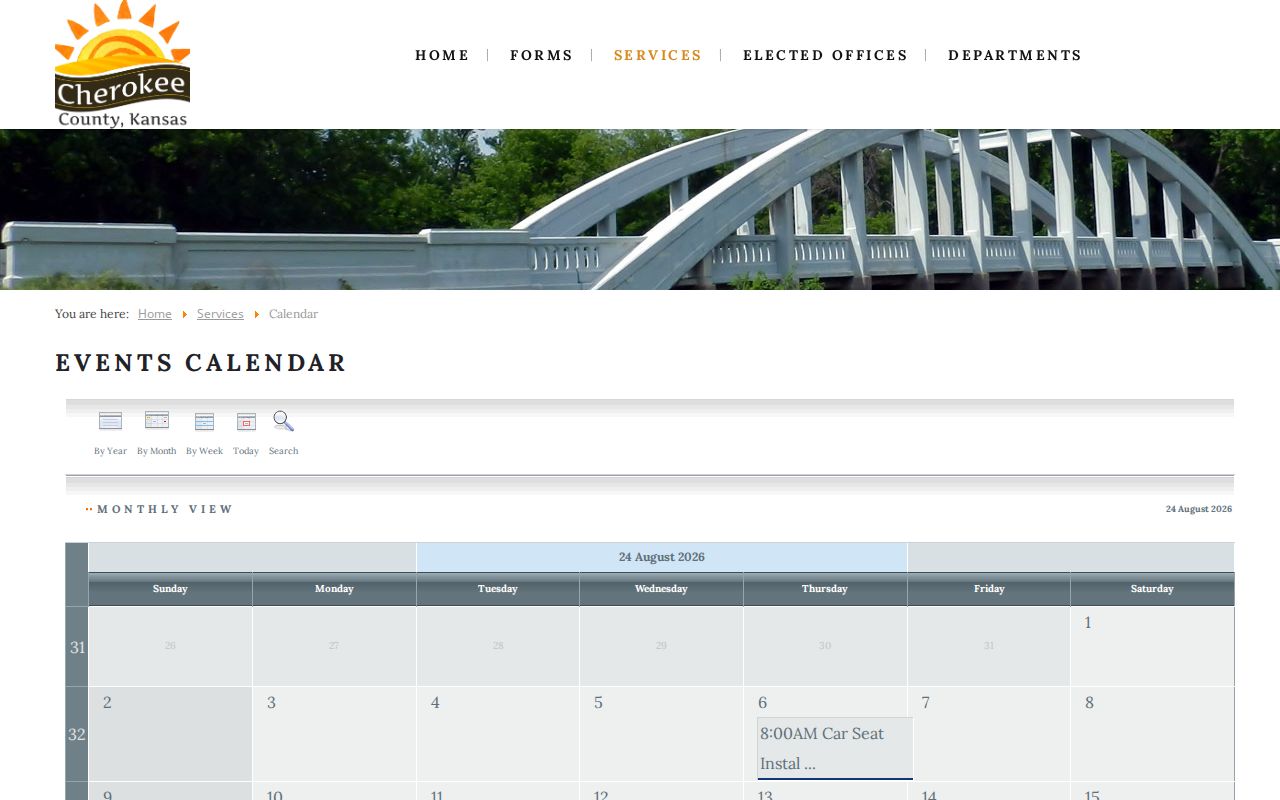
This calendar lists county events only, so it can never prove a court hearing date.
Cherokee Docket Terms in Context
A short label can flip the meaning of a whole row in a Cherokee County court docket. Read every term with its date and the entries that follow it. A disposition means the court entered an outcome. A continuance merely changes timing. A journal entry puts a court action in writing. It often holds more detail than the index label suggests.
- Setting
- A scheduled court event, not always a trial.
- Continuance
- An approved move to a later date.
- Disposition
- The recorded resolution of a charge, claim, or case.
- Journal entry
- A written record of a ruling or other court action.
- Sealed
- Restricted from ordinary public access by law or court order.
A filing label is not a judicial finding. When the exact language matters, open the public document or ask the clerk for it.
Chronology matters as much as vocabulary. An arraignment marks one stage of a criminal case, not a final result. A motion records only a request, never proof the judge granted it. A later journal entry or order settles the point. If two rows seem to conflict, compare their dates. Then request the public order that controls.
Docket Access Under Kansas Law
Access to a Cherokee County court docket rests on two legal pillars. The Kansas Open Records Act backs the public's claim to court records, yet it cannot override statutory confidentiality or a sealing order. On top of that sit the Kansas Supreme Court rules, which decide which records may be displayed, sealed, redacted, or opened through expanded access.
Key Rules:
K.S.A. 45-215 and following establish the Kansas Open Records Act framework.
Kansas Supreme Court Rule 22 identifies court records that are not available through ordinary public access.
Kansas Supreme Court Rule 23 governs sealed and confidential filings.
Kansas Supreme Court Rule 24 addresses personal identifiers and redaction.
Restricted Cherokee County Records
Not every Cherokee County case file will show up in a public docket search. Sealed and confidential records, juvenile and child-in-need-of-care matters, adoptions, expunged material, grand-jury material, unserved warrants, and protected personal information may all be withheld or limited. The governing rule and the case status decide what access you actually get.
No result is not a legal conclusion. Portal absence can reflect a restricted category, a converted file, a search mismatch, or a case kept by another court.
Ask the District Court Clerk whether a public portion exists and what request procedure applies. Staff can route access questions. They cannot disclose protected material or advise you on how to obtain it.
The courthouse kiosk reaches further than the web, yet it answers to the same restrictions. Kansas guidance flags certain juvenile, domestic, guardianship, and pre-Odyssey documents. That material may simply be absent online. Expanded access never means unrestricted access. Sealing orders, confidentiality laws, and redaction rules still bind whatever the custodian releases.
How the Clerk Keeps Docket Records
For a Cherokee County district-court docket, the practical custodian is the District Court Clerk, not the County Clerk. That office maintains the filings, opens public case information to visitors, points people to the courthouse computer, handles copy and certification requests, and helps confirm hearing settings. County administration records and the county KORA form belong to the separate County Clerk, whose role the Cherokee County Clerk page documents in full.
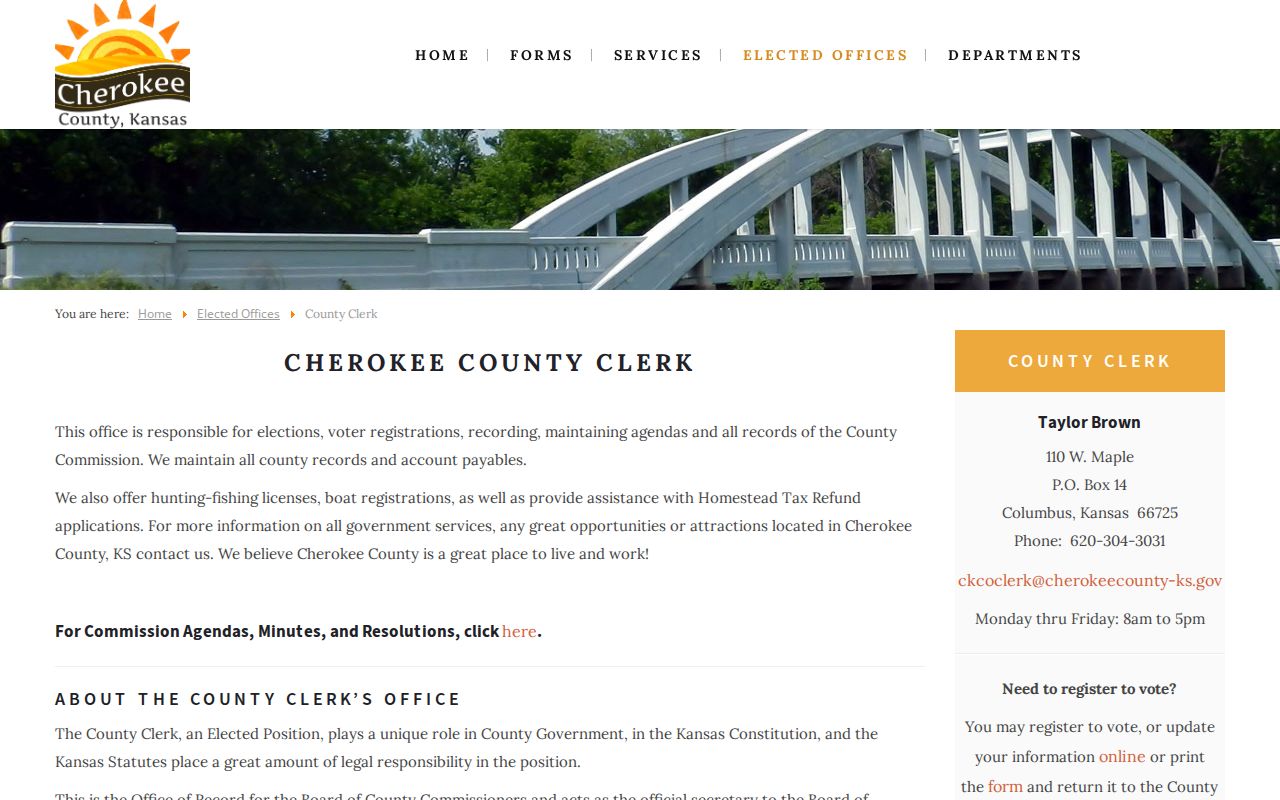
The split matters for your wallet too. County administration goes to the County Clerk. District case files go to the District Court Clerk. Eleventh Judicial District rules price ordinary district-record copies at $0.25 per page, certification at $1, and concentrated staff time at $12 per hour when assessed, with advance payment sometimes required. Those figures differ from the County Clerk's schedule for county-held records. So confirm the custodian and estimate the cost before ordering many pages.
A strong request names the case number, the exact document, the filing or entry date, the desired format, and whether the copy must be certified. Local procedure encourages written requests, though the rule does not make a form mandatory for every district-record request. Ask about fees before authorizing a large search. Clerk staff also cannot run a broad search demanding legal judgment.
District Court Clerk
Second story, Cherokee County Courthouse
110 W Maple St, Columbus, KS 66725
Monday-Friday, 8:00 a.m.-4:00 p.m.
620-429-3880
Two Cherokee Courthouse Addresses
Maple Street in Columbus carries two official addresses. Cherokee County's own pages and the Sheriff FAQ put the courthouse and the District Court Clerk at 110 W Maple St. The Eleventh Judicial District local rules point to 100 W Maple St, PO Box 189, for judicial offices and mail. Different entrances and different uses may explain the split.
Before you drive over or mail a records request, call the clerk. Ask which address handles the counter, the judge's office, or document delivery. Court security may screen people and bags, and posted rules govern entry. The county's contact page confirms the 110 W Maple reference and the switchboard route.
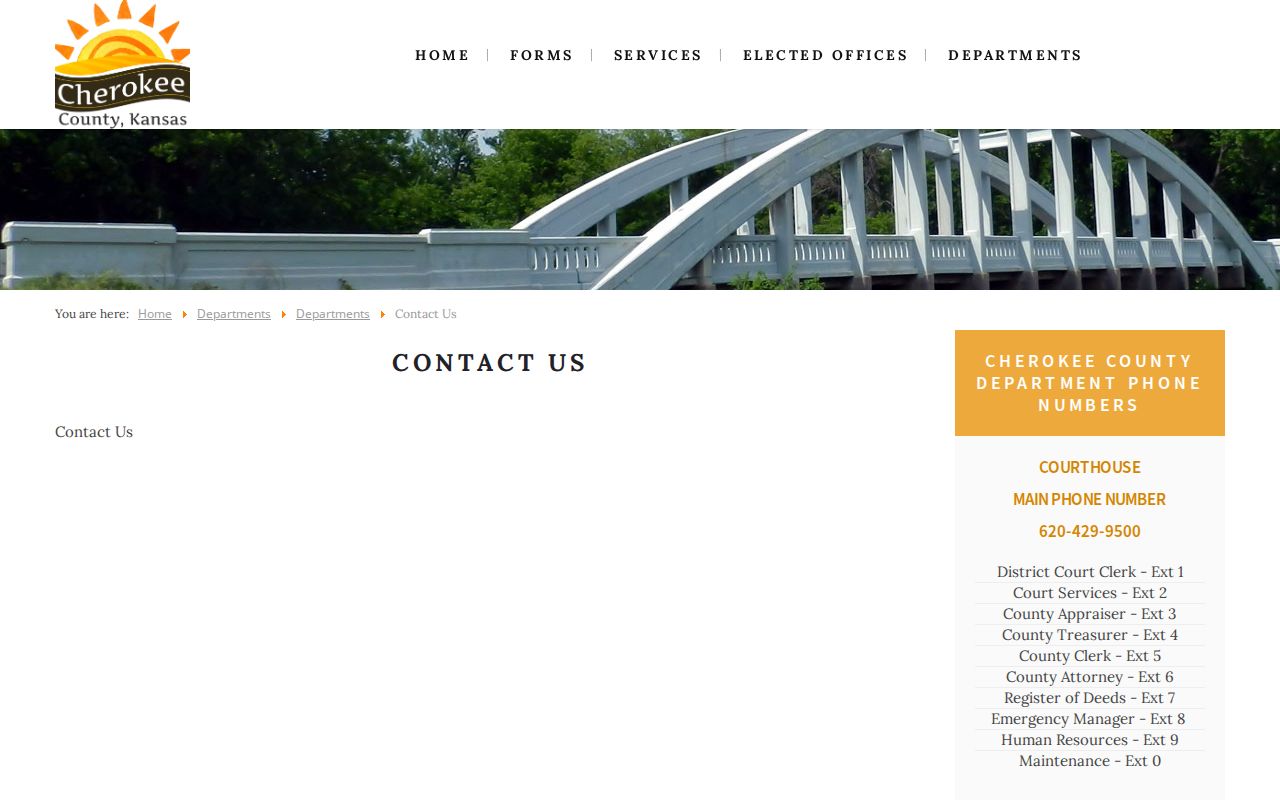
Use that page to confirm county routing, then call the court clerk for a district-case request.
Cherokee Citation Routing Matters
Where does a Cherokee County traffic ticket belong? It depends on the issuing court. Some citations go to Cherokee County District Court, while others belong to a city municipal court. The Sheriff's official FAQ routes district citation questions to the District Court Clerk and warns that online entry can take up to five days after issuance.
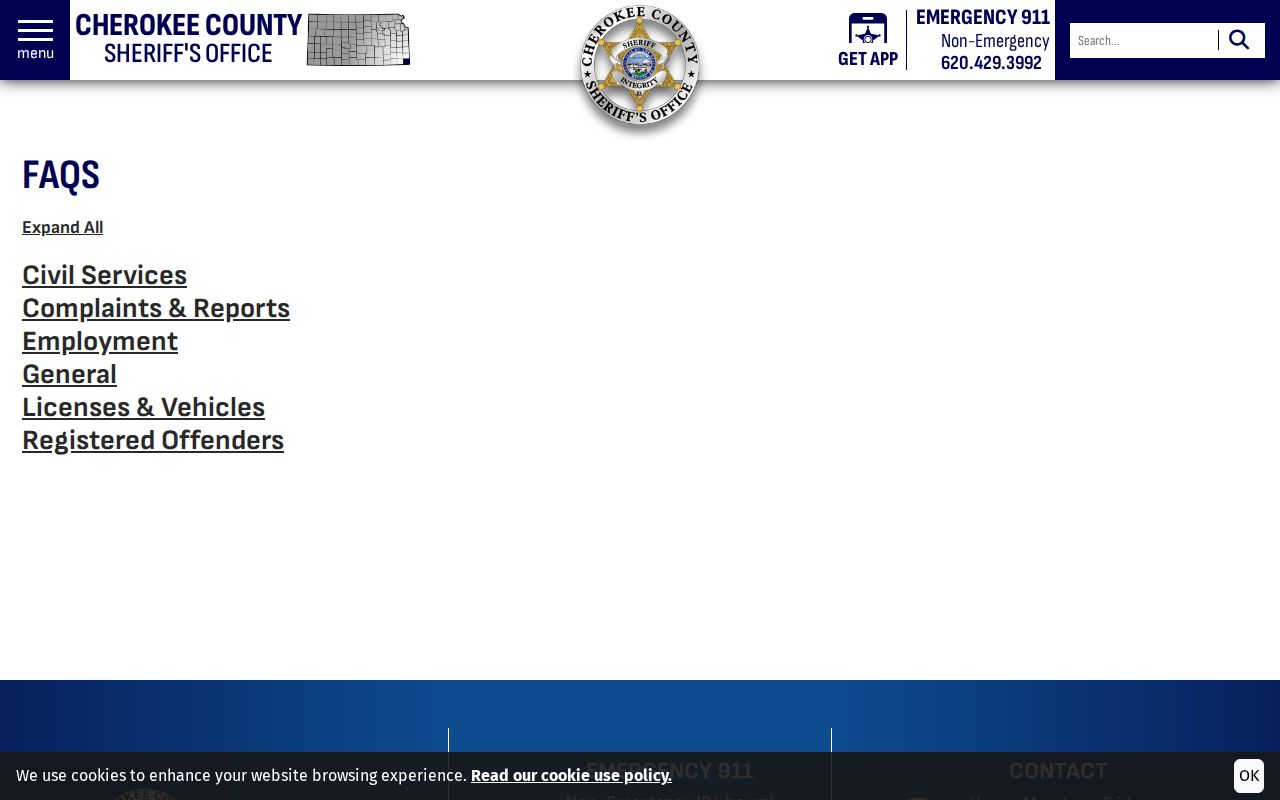
This routing chart links a ticket to the right clerk. It does not replace the court docket or the appearance instructions printed on the citation.
Payment never substitutes for attendance when an appearance is required. A city-issued citation goes to the named municipal clerk. A county district citation calls for the District Court Clerk. Keep the citation number ready, ask about the current setting, and confirm the authorized payment channel.
The Kansas Central Payment Center handles payments and citation searches. It is not a general Cherokee County case-document portal. It can search by citation or case number, by driver-license details, or by name and date of birth where those options apply. Card payments carry a five-percent convenience fee with a one-dollar minimum. An eCheck carries a one-dollar fee. Check eligibility first, because some citations require a court appearance.
City-by-City Dockets in Cherokee County
Each of the county's five largest cities from the 2020 Census place table handles municipal court access differently. Baxter Springs and Columbus publish municipal-court information. Galena publishes a court directory along with schedule documents. Weir and Scammon lean mostly on municipal directory contacts. A city ordinance case or municipal citation starts in that city's court, not the Kansas district portal. A citation naming Cherokee County District Court instead follows the county docket route.
Baxter Springs Court Records
3,888 · Municipal court information and a direct clerk route are published.
Columbus Court Records
2,929 · The city court is separate from the county district court in the same city.
Galena Court Records
2,761 · Official documents identify a weekly Tuesday criminal court date.
Weir Court Records
569 · City clerk contact is the researched fallback because no public search was located.
Scammon Court Records
376 · The city directory supplies the clerk phone and limited afternoon hours.
Map and Directions to the Cherokee County Courthouse
District Court files for Cherokee County are kept at the courthouse in Columbus, where the District Court Clerk's office sits on the second story. Official county pages and the Sheriff's FAQ give the courthouse address as 110 W Maple St, while the Eleventh Judicial District's own local rules list the judicial offices and mailing address as 100 W Maple St, PO Box 189. Confirm the entrance with the clerk before a trip, since the two references may point to different doors of the same complex.
District Court Clerk
Second story, Cherokee County Courthouse
110 W Maple St
Columbus, KS 66725
620-429-3880
Monday-Friday, 8:00 a.m.-4:00 p.m.
Courthouse security may search persons and belongings, and posted courthouse rules control what can be carried inside, so plan a few extra minutes at entry. Because the district judge's office address differs from the clerk's, calling ahead to verify the counter location is the safest way to avoid a wasted trip.